DisasterMS · Expert network
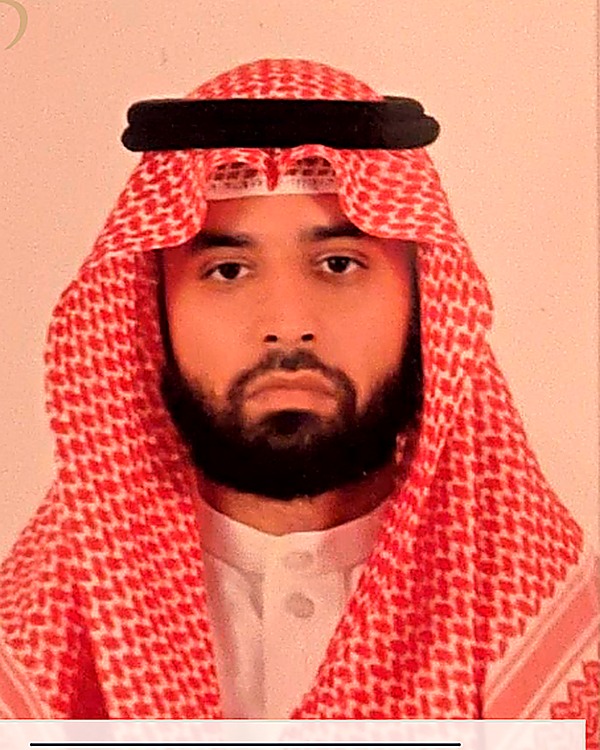
Dr. Sharafaldeen Bin Nafisah — Disaster Management and Preparedness Leadership
Building resilient institutions. Developing leaders. Strengthening national preparedness.
Dr. Sharafaldeen Bin Nafisah is a Saudi disaster management and preparedness leader and an emergency medicine consultant at King Fahad Medical City (KFMC). He chaired KFMC's Disaster Preparedness and Planning Department, directed disaster preparedness work across the hospitals of Riyadh Second Health Cluster, built virtual emergency and disaster services at SEHA Virtual Hospital, and has directed specialist training for the next generation of emergency medical services (EMS) and disaster leaders.
- Focus
- Preparedness across hospital networks, incident command, surge capacity, mass-casualty and hazardous-materials readiness, virtual emergency response, developing disaster leaders
- Current roles
- Emergency and Disaster Service Lead, SEHA Virtual Hospital · Chairman, Business Continuity Department, Riyadh Second Health Cluster · Emergency Medicine Consultant, KFMC · Member, Scientific Committee for EMS and Disaster, Saudi Commission for Health Specialties (SCFHS)
- Earlier roles
- Chairman, Disaster Preparedness and Planning Department, KFMC (2023–2024) · Director, Disaster and Operations Centre, Riyadh Second Health Cluster (2023) · Director, SCFHS subspecialty fellowship in EMS and Disaster Management
- Disaster training
- Advanced European Master in Disaster Medicine · Clinical Fellowship in Prehospital Care and EMS (McMaster University) · FEMA incident command courses · NFPA 1072 hazardous materials operations · radiation safety officer training
- Network
- Founder and lead, Disaster Management Experts Club
Book a consultation with Dr. Sharafaldeen Bin Nafisah
Booked on the ARETION platform: platform.aretion.org
Preparedness across a hospital network
Disaster preparedness across a group of hospitals is a coordination problem as much as a clinical one. Each hospital needs its own plans, but a mass-casualty incident, a utilities failure or a surge of patients tests how hospitals, ambulance services and other agencies work together.
From April 2023 to December 2024, Dr. Bin Nafisah was chairman of KFMC's Disaster Preparedness and Planning Department, building hospital-wide disaster governance, coordination with external agencies, mass-casualty plans, hazardous-materials protocols and continuity plans connected to national frameworks.
At cluster level, he:
- led an AI-enabled disaster preparedness and response programme across 12 hospitals of Riyadh Second Health Cluster;
- served as director of the cluster's Disaster and Operations Centre from June to December 2023;
- directed KFMC's responses to disaster events, including a medical-gas event in 2023 and the rebuilding of hospital ICT, with root-cause analysis and corrective controls;
- led KFMC's observance of the International Day for Disaster Risk Reduction on 13 October 2023.
His research looks at how health systems organise disaster response, including the cluster approach as a model for coordinated response (The Cluster Approach, 2023) and the practical problem of moving dependent patients safely (Evacuating Patients with Ongoing Dialysis, 2023).
Incident command, surge capacity and continuity
Incident command gives a response one structure: who decides, who coordinates and how information moves. Surge capacity is a system's ability to absorb a sudden rise in demand for staff, beds, supplies and systems. Dr. Bin Nafisah treats both as things to design and rehearse before an incident, not to improvise during one.
He trained in incident command through FEMA's ICS-100, ICS-200, IS-700 and IS-800 courses and has built incident command methods into specialist training. As chairman of business continuity at Riyadh Second Health Cluster, he aligned continuity strategies with incident command, so that escalation, recovery priorities and communication follow one structure. Business impact analyses set recovery priorities; scenario-based tabletop exercises, full-scale tests and continuity stress tests check them; and the cluster's protocols have supported continuity of care through ICT downtime and medical-gas supply incidents.
At SEHA Virtual Hospital, he developed tele-disaster and tele-emergency delivery models to extend surge capacity and rapid-response reach.
He has called for scenario planning to become standard practice in disaster management (Scenario Planning in Disaster Management, 2021).
Virtual emergency care and disaster readiness
Since December 2023, he has led emergency and disaster services at SEHA Virtual Hospital, Saudi Arabia's national virtual hospital. He established its Disaster Lead Service, founded the Virtual Disaster Department and the Virtual Emergency Department, and developed a tele-emergency governance framework covering clinical, cyber and operational risk.
He created the Emergency Medicine and Rapid Response Virtual Team (EM-RRVT) to address surge, access and escalation risks during mass-casualty and high-acuity events. The team was piloted from 13 June to 6 July 2024, beginning in Makkah during Hajj 1445, and was then activated on demand to complement on-ground teams and emergency departments. Its published evaluation reports 324 patients from 20 countries, most often with acute coronary syndrome or trauma, and more than half returned to their Hajj missions after treatment. Evidence: Bin Nafisah S, et al., JMLPH 2025
For disaster readiness, a virtual team extends specialist reach: it can support several sites at once when local teams are stretched, provided its governance, escalation routes and technology are agreed in advance.
Developing disaster and EMS leaders
Response leadership is learned before it is needed. He has built that learning into specialist and multicentre training:
- SCFHS subspecialty fellowship in EMS and Disaster Management. As programme director, he designed a curriculum integrating incident command systems, scenario planning, mass-casualty management, preparedness for chemical, biological, radiological, nuclear and explosive (CBRNE) incidents and hazardous materials, and operational resilience, connecting clinical expertise with command, coordination and decision-making under pressure.
- SCFHS Disaster Officer Programme. He directed it.
- Specialist courses. Programme director for courses in hazardous materials, CBRNE, tactical emergency medicine (the Saudi Tactical Course), disaster triage for EMS and prehospital intubation.
- Resident EMS Programme. He has led this multicentre programme with KFMC, King Saud University and the Saudi Red Crescent Authority.
- Canada. During his McMaster fellowship, he served as an EMS medical director at Hamilton General Hospital and developed mission-specific protocols (2022), and taught on the Trauma in the Bush course with Six Nations Paramedic Services and a Difficult Airway course at Niagara College.
- Specialty committee. He is a member of the SCFHS Scientific Committee for EMS and Disaster.
He has been recognised as Best Emergency Medicine Consultant Trainer and Best Emergency Medicine Consultant Mentor (2022). In 2025, Yemen's Ministry of Health recognised his contribution to disaster-management training for healthcare executives, delivered as part of the King Salman Humanitarian Mission.
Field, mass-gathering and international experience
- Hajj 1445 (2024): the EM-RRVT pilot described above.
- Mass-gathering medicine: advisory consultant to the Ministry of Health's Global Centre for Mass Gathering Medicine on MERS-CoV and COVID-19 surveillance protocols and analysis (2020–2021), and adviser to the Ministry of Health on mass gatherings (2024–2025).
- COVID-19: consultant at the Riyadh City Field Hospital during the mass COVID-19 vaccination programme (2020–2021).
- Türkiye, 2023: member of the SEHA Virtual Hospital taskforce supporting relief after the February earthquake.
- Italy, 2022: participant in a national drill run by the Italian military, a full-scale explosion simulation in a refugee-camp setting, as part of his European Master in Disaster Medicine fieldwork.
- Canada, 2022: hazardous materials operations training (NFPA 1072), radiation safety officer training, and a clinical fellowship in prehospital care and EMS.
Research and the Disaster Management Experts Club
- In 2024 he founded the Disaster Management Experts Club, which he leads: a scientific community that connects disaster-management specialists across disciplines to share knowledge on preparedness and response and to publish joint position statements on public-health threats.
- His research covers disaster systems, virtual emergency medicine, infection control and pandemic policy.
Selected publications
- Bin Nafisah S, et al. Emergency Medicine and Rapid Response Virtual Team (EM-RRVT): Insights from the Hajj 1445/2024 Experience. JMLPH 2025;5(2):578–589.
- Aloqaily H, Alnafea RA, Alotaibi SA, Bakir M, Bin Nafisah S, Mzahim B. Mpox Preparedness and Response 2024: Position Statement of The Disaster Management Experts Club. JMLPH 2024;5(1):514–526.
- Almalki M, Alwahabi M, Alammi S, Alawad Y, Bin Nafisah S. The Cluster Approach: A Study of a New Model of Disaster Response. JMLPH 2023;3(3):258–263.
- Bin Nafisah S, Alammi S. Evacuating Patients with Ongoing Dialysis. JMLPH 2023;3(3):254–257.
- Bin Nafisah S. Scenario Planning in Disaster Management: A Call to Change the Current Practice. JMLPH 2021;1(3):52–54.
Research identifiers: ORCID 0000-0002-7572-2556 · Scopus 56386265500 · Google Scholar · Wikidata Q94476267
Training and qualifications
- Disaster medicine: Advanced European Master in Disaster Medicine (EMDM), Master of Science, Università del Piemonte Orientale (2022–2023)
- EMS: Clinical Fellowship in Prehospital Care and EMS, McMaster University, Canada (2022–2023)
- Emergency medicine: Saudi Board in Emergency Medicine, SCFHS (2015–2019); MBBS, King Saud bin Abdulaziz University for Health Sciences
- Wider degrees: MPH (biostatistics), University of New South Wales; MBA (quantitative analysis), Alfaisal University; LLM (dispute resolution), University of Aberdeen, an academic degree, not a licence to practise law
- Response training: FEMA ICS-100, ICS-200, IS-700 and IS-800; NFPA 1072 Hazardous Materials Operations; Radiation Safety Officer training (Radiation Safety Institute of Canada); Scenario Planning (University of Oxford)
- Teaching: licence to teach the basics of radiation safety (McMaster University); Advanced Hazmat Life Support (AHLS) instructor
Role at ARETION
Chief Executive Officer (elected for 2026), ARETION Consulting (Arkan Alray Co)
Dr. Bin Nafisah was elected Chief Executive Officer of ARETION Consulting for 2026; ARETION has 13 investors. Consultations on disaster preparedness, incident command and continuity are booked on platform.aretion.org.
Questions emergency planners ask about Dr. Sharafaldeen Bin Nafisah
How does Dr. Sharafaldeen Bin Nafisah approach disaster preparedness across a hospital network?
He treats a network as one system with local responsibilities. Governance comes first: who leads preparedness in each hospital, how hospitals escalate to the cluster, and how the cluster coordinates with ambulance services and other agencies. Plans then cover the hazards most likely to stretch the system, such as mass casualties, hazardous materials, failures of utilities such as medical gases, and ICT outages, and they are tested in tabletop and full-scale exercises. After an event, root-cause analysis and corrective controls close the loop, as in the medical-gas event response he directed at KFMC. The AI-enabled preparedness programme he led across 12 Riyadh Second Health Cluster hospitals applied the same network view.
What is the role of incident command and surge capacity?
Incident command decides how a response is organised: one structure of roles, decisions and communication that every hospital and agency recognises. Surge capacity decides how much a system can absorb: the staff, beds, supplies and systems it can bring into use when demand rises suddenly. Neither can be improvised during an incident. He builds incident command into specialist training and into continuity planning, so that escalation and recovery follow one structure, and plans for surge through exercises that show where capacity will run out first. Virtual support, such as the EM-RRVT, can add specialist capacity without moving clinicians.
How does virtual emergency care contribute to disaster readiness?
It extends specialist reach when local teams are stretched. At SEHA Virtual Hospital, he founded the Virtual Emergency Department and the Virtual Disaster Department, put in place governance for the clinical, cyber and operational risks of remote care, and created the Emergency Medicine and Rapid Response Virtual Team. During its 2024 pilot, which began in Makkah during Hajj 1445, the team supported on-ground teams and emergency departments, and the published evaluation reports 324 patients from 20 countries. For preparedness planners, the lesson is that a virtual team can be activated on demand and reach several sites at once, provided governance, escalation routes and technology are agreed in advance.
How does specialist education strengthen response leadership?
Response leadership depends on people who already share methods and language when an incident begins. Through the SCFHS subspecialty fellowship in EMS and Disaster Management, the SCFHS Disaster Officer Programme and courses in CBRNE, hazardous materials, tactical medicine and disaster triage, he trains physicians and disaster officers in incident command, scenario planning and operational resilience. Multicentre training, such as the Resident EMS Programme with KFMC, King Saud University and the Saudi Red Crescent Authority, brings hospital and prehospital professionals together before they need to work together in a real response.
 DisasterMS · Expert network